



Ready
to Buy
|
|

The
NEW multi-tool to carry in tropical paradise!

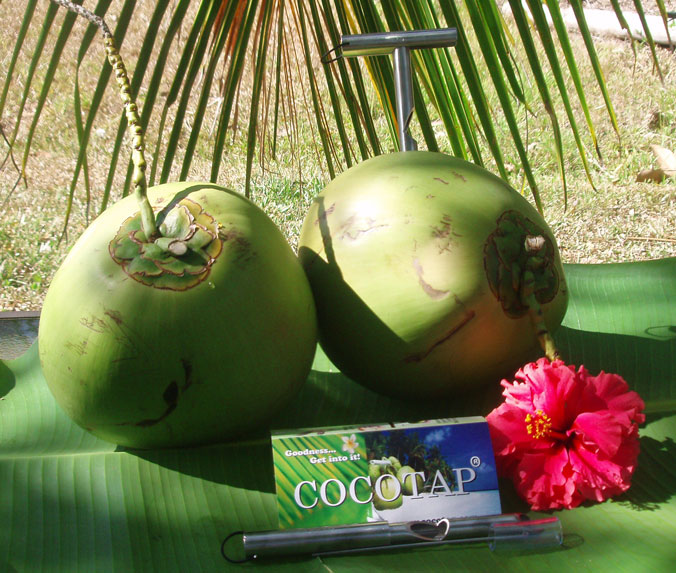
COCOTAP® makes the most
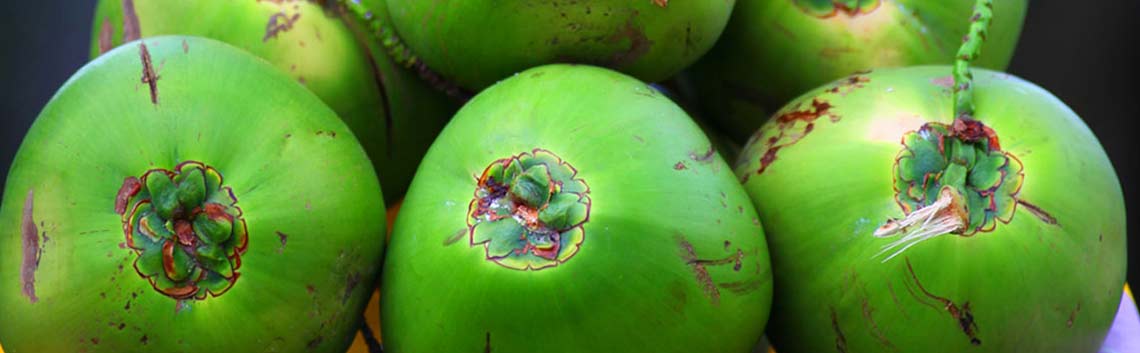
naturally refreshing drink ever, totally accessible. It eliminates the mess of opening coconuts with
machetes, is simple, safe and now, easier to utilize nature's perfect
packaging.
~Australia Network "NEXUS" English Learning Program
Coconut water contains an abundance of natural goodness including growth
factors like cytokinins, which are nature's anti-ageing compounds. It has
been traditionally consumed around the tropical world for rehydration,
refreshment, as a sterile water source, to soothe infants, dissolve
kidney stones, kill intestinal worms, facilitate removal of toxins from
the blood, boost libido, for healthy skin and hair as well as a
laboratory growing medium and an emergency blood plasma substitute. Now,
also recognized as high in antioxidants and useful in cholesterol
control and ophthalmic relief.
Simply
one of the greatest gifts of Nature. The Coconut has been called "the milk
bottle on the doorstep of mankind" ...facilitating the spread of our
civilizations from day one!

COCOTAP's
other uses:
An 11th finger for tropical adventurers
It's a round
knife and survival multi tool, it can
also be used to de-husk a more mature coconut , as a coconut harvesting gaff
hook (when no climber, pole-saw or monkey), for
opening shellfish, to pierce a tin can, to bait a crab pot, crack into a crab claw,
as a tent peg extractor,
Alan key extension, great to
untie a knot, splice a rope, or cut
fishing line, as a
grappling hook, a leatherwork tool, for carving anything,
weaving aid, digging gem
stones, even playing slide guitar, the possibilities are endless.
Great on the beach, in a boat or in the jungle.

How do you say
Coconut???
Please let me know your
traditional Coconut uses, terms and favorite recipes....e-mail me
here.
Arabic - Narjil
Chinese – Ye, Ye zi
Dutch - Kokonut, kokospalme
English-Coconut (palm and fruit)
Fijian - Niu
French - Klapper, Cocotier (palm) noix de coco
French Polynesia – Coco
(Tahitian) - Haere
German – Kokonus
Ghana – Kube, Kukue
India (Hindi) – Nariyal ~ Naarial
(Malayalam) – Thengu
(Telugu) – Kobbari, Tenkai
(Punjabi)- Narikela
(Urdu) - Nariyel
Indonesia – Kelapa, Muda (young nut) Tua (Mature nut)
(Javanese) – Kerambil
Italian - Noce de coco
Japanese - Kokonatisu, Yasinomi
Kiribas – Te Ben
Latin - Cocos
Malaysian - Buah nyior, Kelapa
Marshall Islands - Ni
Nicobar islands - Pulo Niuor
Papua New Guinea - Niu, Kulau (immature nut)
Persian - Narzil-e-dariyai
Philippines - Niyog, Lubi
Polynesian – Niu
(Tuvaluan)- Pii, mukomuko, uto, motomoto, utani (successive stages)
Portuguese – Coqueiro (palm), Coco, Noz de coco
Russian - Kokosovurey oryekh
Seychellois – Coco, pye coco
Slovakia - Kokosovy orech
Solomon Islands- Te moimoto, ngohara, niu
Spanish – Cocotero (palm)
Swahili - Mnazi
Sri Lanka (Tamil) - Thengai
(Singhalese) Thembili pol
Tanzanian – Mikocheni
Thailand – Ma prao
Vietnamese - Cay dua

|